


 Cart
Cart
 sales@molnova.com


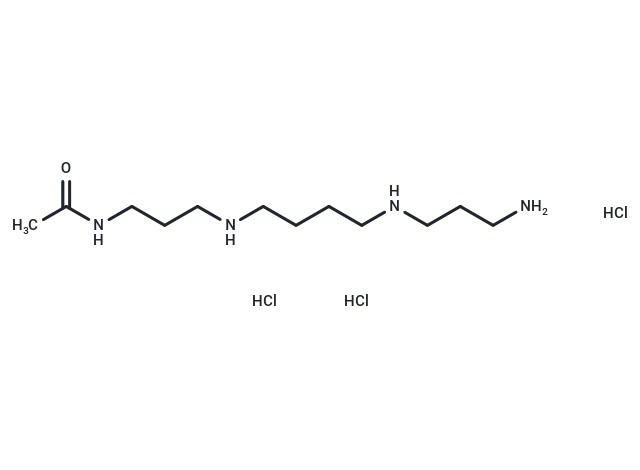
N1-Acetylspermine trihydrochloride
CAS No. 77928-70-2
N1-Acetylspermine trihydrochloride( —— )
Catalog No. M34838 CAS No. 77928-70-2
N1-Acetylspermine trihydrochloride is a monoacetylated derivative of spermine which is an endogenous polyamine.
Purity : >98% (HPLC)
 COA
Datasheet
HNMR
HPLC
MSDS
Handing Instructions
COA
Datasheet
HNMR
HPLC
MSDS
Handing Instructions
| Size | Price / USD | Stock | Quantity |
| 25MG | 86 | Get Quote |


|
| 50MG | 158 | Get Quote |
|
| 500MG | Get Quote | Get Quote |
|
| 1G | Get Quote | Get Quote |
|
Biological Information
-
Product NameN1-Acetylspermine trihydrochloride
-
NoteResearch use only, not for human use.
-
Brief DescriptionN1-Acetylspermine trihydrochloride is a monoacetylated derivative of spermine which is an endogenous polyamine.
-
DescriptionN1-Acetylspermine trihydrochloride is an endogenous metabolite present in Urine that can be used for the research of Leukemia.
-
In VitroEndogenous metabolites is defined as those that are annotated by Kyoto Encyclopedia of Genes and Genomes as substrates or products of the ~1900 metabolic enzymes encoded in our genome. It is clear in the body of literature that there are documented toxic properties for many of these metabolites.
-
In Vivo——
-
Synonyms——
-
PathwayProteasome/Ubiquitin
-
TargetEndogenous Metabolite
-
RecptorEndogenous Metabolite
-
Research Area——
-
Indication——
Chemical Information
-
CAS Number77928-70-2
-
Formula Weight353.76
-
Molecular FormulaC12H31Cl3N4O
-
Purity>98% (HPLC)
-
Solubility——
-
SMILESCC(=O)NCCCNCCCCNCCCN.Cl.Cl.Cl
-
Chemical Name——
Shipping & Storage Information
-
Storage(-20℃)
-
ShippingWith Ice Pack
-
Stability≥ 2 years
Reference
1. Lee SH, et al. Polyamine profiles in the urine of patients with leukemia. Cancer Lett. 1998 Jan 9;122(1-2):1-8.?
molnova catalog



related products
-
L-Alanyl-L-leucine
L-Alanyl-L-leucine (H-Ala-Leu-OH) is a dipeptide compound that is involved in protein synthesis.
-
3-Indoleacrylic acid
3-Indoleacrylic acid is a metabolite of tryptophan produced by Peptostreptococcus species. 3-Indoleacrylic acid has a beneficial effect on intestinal epithelial barrier function and mitigates inflammatory responses by immune cells.
-
3,5-Dimethylbenzalde...
3,5-Dimethylbenzaldehyde has broad-spectrum antimicrobial activity, inhibiting Bacillus subtilis, Pseudomonas albicans, Escherichia coli, Pseudomonas aeruginosa, Staphylococcus aureus and Streptococcus pneumoniae.
